Eave, Rake, And Edge
Freestanding shops and metal buildings take monsoon gusts on every side. Loose rake trim is often the first piece to lift and the first place rain gets in.
Swift Trail Junction, AZ
As a commercial roofing contractor serving Swift Trail Junction, we repair and replace metal and membrane roofs on shops and commercial buildings along US-191 south of Safford.
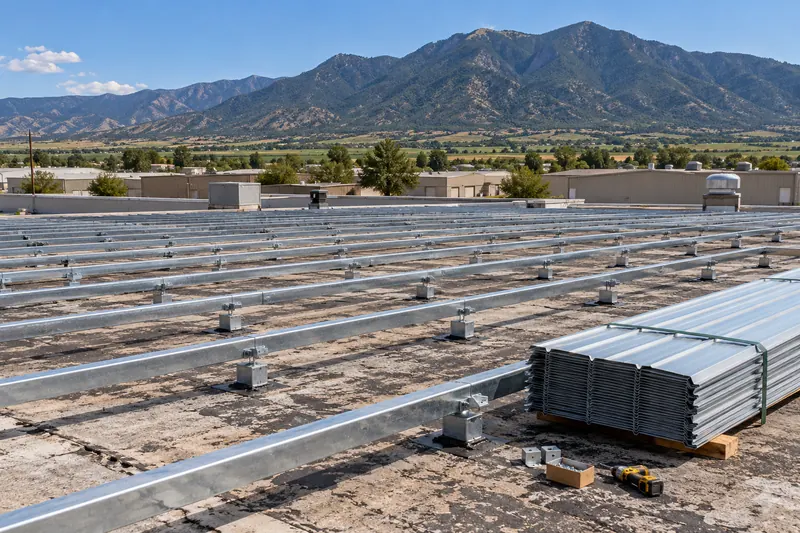
Swift Trail Junction Angle
Swift Trail Junction sits in unincorporated Graham County, so roofing permits go through the county rather than a city or town. Graham County takes all building and installation permits through its online portal.
The county advises uploading building plans, a plot plan sketch, and power-of-attorney forms with an application to avoid a rejection. Gathering those before the roof estimate is final keeps the start date on track.
Swift Trail Junction Roof Zones
Shops, metal buildings, and small commercial roofs along US-191 wear in the same five zones.
Freestanding shops and metal buildings take monsoon gusts on every side. Loose rake trim is often the first piece to lift and the first place rain gets in.
Through-fastened shop roofs lose screws to heat and cold cycling, and cracked washers let water follow the screw shank into the building, dripping onto whatever is stored below.
Low-slope office or storage additions beside metal shops often carry EPDM or TPO. The line where the membrane meets the metal wall or roof is the most common leak point.
Gutters on long shop roofs overflow when dust and debris build up between storms. Undersized downspouts and missing splash blocks let roof water pool against the building.
Condensation drips, rust on purlins, and stained insulation facing inside metal buildings point to moisture problems that a roof check from below sorts out.
Swift Trail Junction Seasons
South of Safford on US-191, these roofs take the summer heat, monsoon storms, and winter freezes of the rest of the Gila Valley.
Hot afternoons expand shop panels and loosen fasteners a little each day. A spring screw round, with cracked washers replaced, closes those roof leak points before the heat peaks.
Monsoon gusts hit freestanding shops from every side. Fastened rake trim, ridge closures, and secured edge metal keep panels and membrane in place when the storms roll in.
Freezing nights chill uninsulated metal roofs, and morning condensation drips onto equipment and stock. Insulation with a vapor barrier under the panels stops the morning drip.
Fall is the time to plan spring roof work: gather the county permit items, settle the scope, and order material so work starts before the monsoon arrives.
Roof Systems
Metal and EPDM cover the shops and small commercial buildings along US-191.
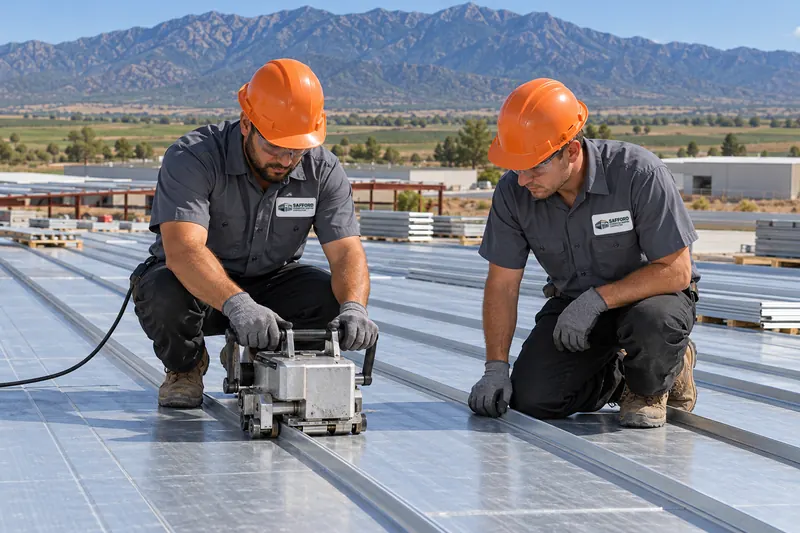
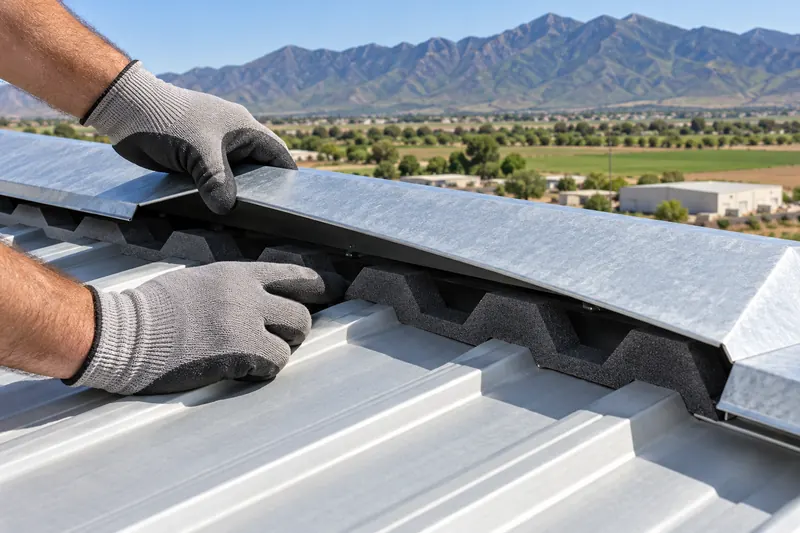
New panels, fastener rounds, and retrofit framing for shops and pre-engineered steel buildings that need to shed monsoon rain fast.
Metal roofing details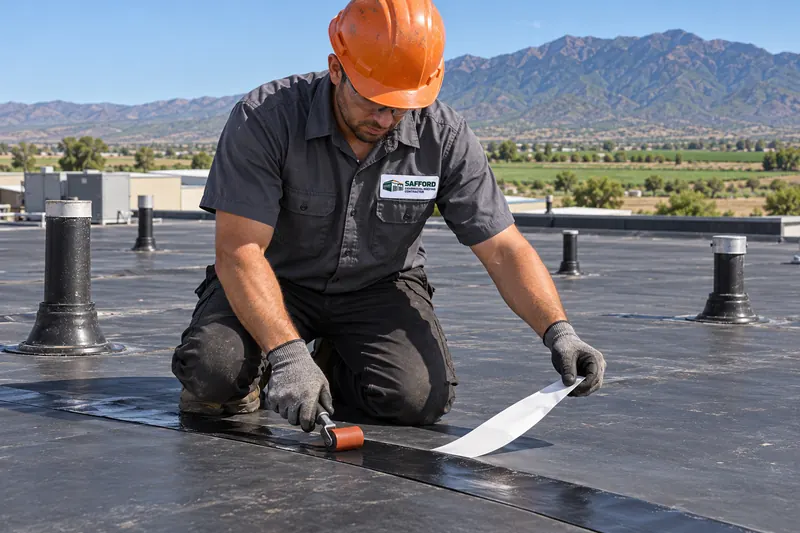
Rubber membrane for low-slope additions beside metal buildings, flashed into the panel wall where most of those leaks begin.
EPDM roofing detailsCounty Parcel?
Start with a free estimate. The inspection produces the roof plan and scope that the county application asks for.
Swift Trail Junction Process
Five steps, with the Graham County application folded into the schedule.
Every panel run, transition, and gutter gets checked, with a look from inside the building at purlins, insulation facing, and any morning condensation drips.
Measurements and photos turn into a roof plan and written scope, the same documents that support the county building permit application for the parcel.
The application goes in through the Graham County online portal with building plans, a plot plan sketch, the roof scope, and any power-of-attorney forms the owner signs.
Panels, fasteners, trim, and any EPDM transitions go on in order, with each open area closed before the end of the workday so stored equipment stays dry.
A final walk with photos covers every panel run and transition, then you get a fastener-check and gutter-cleaning schedule matched to spring and fall.
Swift Trail Junction Questions
Answers for shop and commercial building owners on county parcels south of Safford.
Repair makes sense when damage is limited and the rest of the roof is sound, and replacement makes sense when problems are widespread or the insulation underneath is wet. Leaks at a few seams or penetrations, dry insulation, and a flexible membrane point to repair. An infrared or core-sample check shows how much is wet before you decide.
Graham County Planning and Zoning. Swift Trail Junction is unincorporated, so applications go through the online portal of the county, which advises including building plans, a plot plan sketch, and power-of-attorney forms. Starting the paperwork early keeps the roof schedule on track.
A simple drawing of the parcel that shows the building, property lines, driveways, and nearby structures, with the roof area marked. Graham County lists it among the items to upload with a building permit application, and Planning and Zoning can confirm the detail it expects.
Often. New oversized screws and washers, fresh lap sealant, and fastened trim stop most leaks on panels that still have solid metal. Panels rusted through at laps or eaves get swapped one at a time during the same visit to the shop.
Condensation. Warm, moist air inside meets panels chilled overnight and forms water on their underside, which drips at dawn. Insulation with a vapor barrier under the panels, or better ventilation, stops it, while new screws and sealant only fix leaks from rain.
Yes. The membrane runs up the wall and gets terminated under a metal counterflashing or a flashing strip shaped to the panel profile, with closures filling the ribs. That transition is where most leaks on these combined roofs start, so it gets extra care.
Photograph the damage from the ground and from inside, move stored goods away from drips, and call for a roof check. Temporary repairs stop the water while the permanent fix and any insurance claim get sorted out with photos of each area.
Twice a year, in spring and fall, and after strong monsoon storms. Each visit covers fasteners, trim, gutters, and any membrane transitions, and the notes go into a simple log for the building so repairs stay small.
Free Estimate
Send the roof size and the parcel address. We will inspect the roof and put together the roof plan the county permit asks for.
Roof Question?
Leave a name and number and we will call you back about the building.
Or call now: +1 (623) 310-0167