Eave And Edge
Long eaves on metal processing buildings catch monsoon wind along their full length. Loose trim and missing ridge closures let dust and rain blow in under the panels.
Solomon, AZ
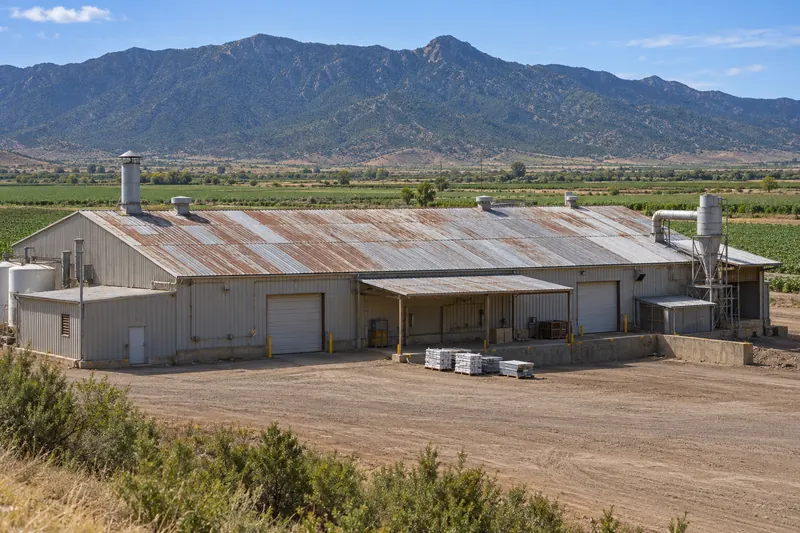
As a commercial roofing contractor serving Solomon, we repair and replace metal and membrane roofs on farm and processing buildings, timed around the months your line runs.
Solomon Angle
Solomon sits east of Safford along US-70 in unincorporated Graham County. Where a gin, a packing shed, or a feed building runs hard for part of the year, the best roof work window is the slow season, when equipment can shut down and the floor below can be cleared.
Planning that window early leaves time for the county permit and material orders, so the roof is done before the next run starts.
Solomon Roof Zones
Dust, lint, and long idle months shape how these roofs wear. Walk the five zones before the next season starts.
Long eaves on metal processing buildings catch monsoon wind along their full length. Loose trim and missing ridge closures let dust and rain blow in under the panels.
Lint and dust packed into panel laps and membrane seams hold moisture for days after a storm. Rust along the laps of metal roofs often starts under that debris.
Gutters fill with field dust and chaff between seasons. When the first heavy rain hits a full gutter, water backs up under the eave panels and into the wall.
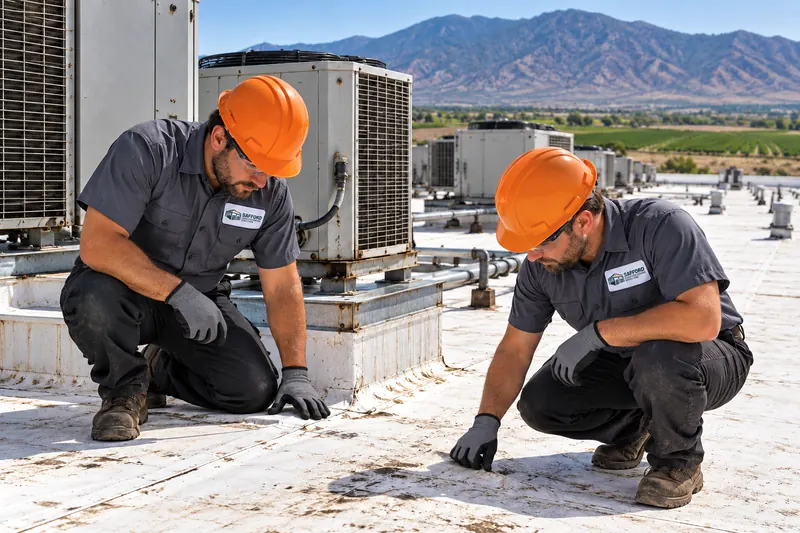
Exhaust stacks, cyclone ducts, and conveyor openings shake through every run. Their flashing loosens and cracks, and the leak only shows when it rains during the season.
Rusted purlins and deck under long-running leaks weaken the roof where equipment hangs. Core cuts and a look from below show what needs replacing before new panels go up.
Solomon Seasons
By the Safford climate record, the valley around Solomon sees about 40 days a year at 100°F or above and 74 nights at or below freezing.
Long metal roofs on processing buildings expand every hot afternoon. Fasteners back out over a season, so a pre-season fastener round catches them before the line starts.
Monsoon wind packs dust into gutters and roof laps right before the rain. Clearing gutters and checking laps after each windy spell keeps water out of the plant.
Cooler months are when many seasonal lines slow down, so tear-off and panel work fit there. Adhesives and sealants get warmed or swapped for cold-weather products on freezing mornings.
A roof walk before the run starts and another after it ends gives two clean looks at the roof each year. The notes from each visit feed the next work window.
Roof Systems
Three systems cover the farm, processing, and storage buildings east of Safford.
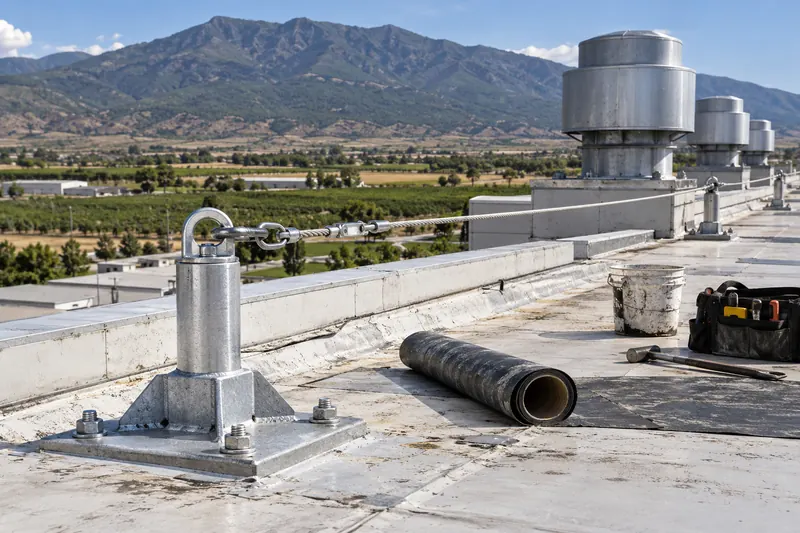
Phased roof work on processing buildings, with fall protection, heavy flashing at stacks, and sections closed watertight each day.
Industrial roofing details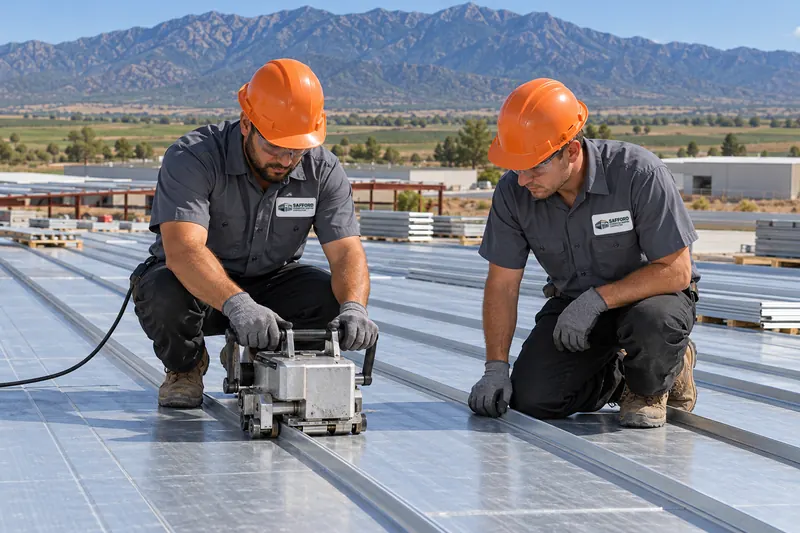
New standing seam or through-fastened panels for sheds and processing buildings, plus fastener rounds on panels worth keeping.
Metal roofing details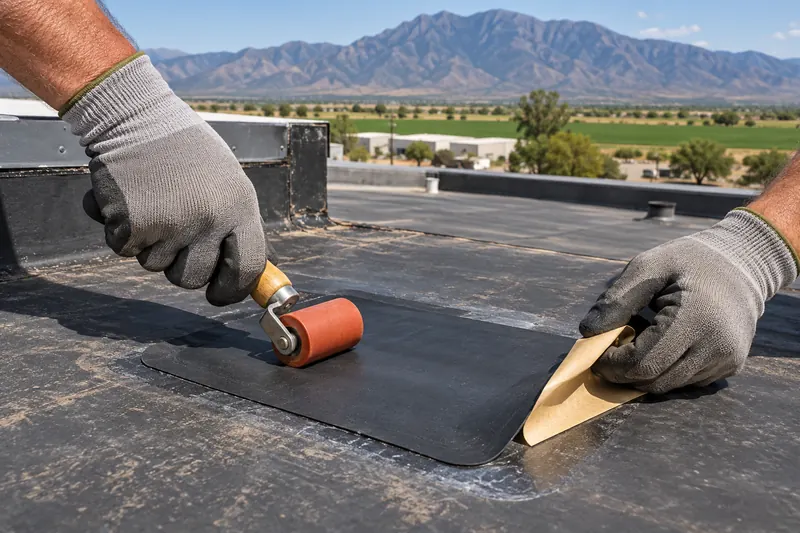
Rubber membrane for flat additions and storage roofs without cooling, flashed around the pipes and vents those buildings collect.
EPDM roofing detailsSeason Coming Up?
Call with your run dates and where the water lands. We will fit the inspection, and any repair, into the gap before the line starts.
Solomon Process
Five steps, each timed to your production calendar and the county permit.
Ideally right after the season ends, while leaks from the last storms are fresh. The walk covers laps, fasteners, stacks, and gutters, with a look from below at purlins and deck.
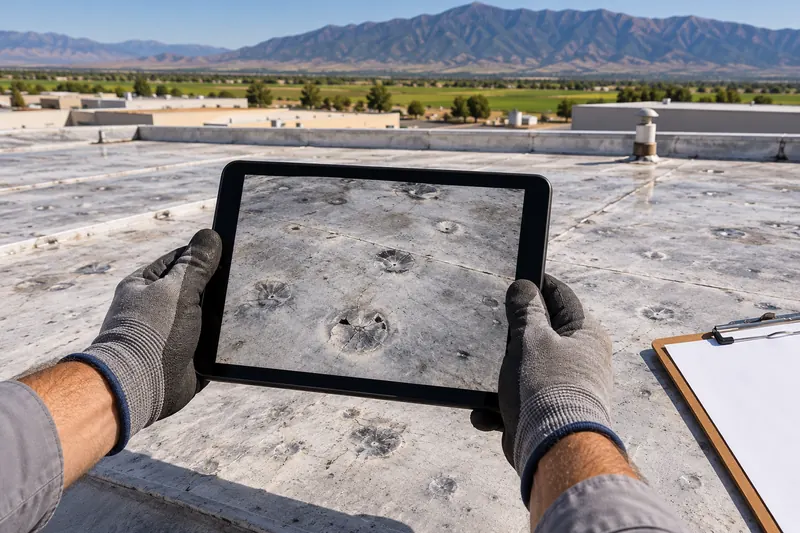
Your production calendar sets the dates. Tear-off, panel work, and stack flashing land in the slow months, with a buffer before the next run starts up.
Solomon sits in unincorporated Graham County, so the building permit for the roof goes through the county online portal with plans, a plot plan sketch, and any power-of-attorney forms.
Dust and debris come off first so seams and laps bond. Rusted panels, purlins, and deck get replaced, then new panels or membrane go on with heavy flashing at every stack.
The roof gets a final walk, gutters get cleared, and you get photos plus a short checklist for the next pre-season walk on the roof.
Nearby Towns
Commercial roofing west of Solomon along US-70 and south on US-191.
Retail, school, and warehouse roofs in the city.
Town-permitted roofs with design review on some changes.
Shops and small commercial roofs on county parcels.
Solomon Questions
Answers for farm, processing, and storage building owners east of Safford.
In most cases, yes. Roof work can be phased so stores stay open, gins keep running during the season, and offices keep normal hours. Noisy or odorous tasks move to early mornings or off-hours, each section stays watertight overnight, staging stays away from entrances and docks, and HVAC disconnects get coordinated with your staff first.
Right after the season ends, once equipment is shut down and the floor below can be cleared or covered. That timing also leaves room for the county permit and material orders before winter mornings slow adhesive and sealant work on the roof.
Graham County. Solomon is unincorporated, so building and installation permits go through the county Planning and Zoning portal. The county advises uploading building plans, a plot plan sketch, and power-of-attorney forms to avoid a rejected application for roof work.
Open sections are kept small and closed before the crew leaves each day. Tarps or plastic go over equipment and stored product below tear-off areas, and debris goes down a chute outside the building, away from doors and air intakes.
Over time, yes. Lint and dust hold moisture against laps and seams, clog gutters, and hide damage. On metal roofs, wet debris along the laps speeds up rust. Regular cleaning and a look after windy spells keep that from spreading.
Often. Panels with surface rust and solid metal get new screws, washers, and lap sealant. Panels rusted through along laps or eaves get replaced, and a mix of both is common on long processing and storage roofs east of Safford.
Any edge without a tall enough parapet needs protection during the work, which on metal farm buildings means most of the perimeter. Temporary anchors or guardrails go up first, and skylights and translucent panels get covered or guarded before anyone walks the roof.
Yes. A post-storm walk with photos documents dents, cracked paint, punctured membrane, and broken skylight panels. Panels dented without cracks usually stay watertight, while punctures and cracked panels get repaired before the next run and the next monsoon.
Free Estimate
Send the roof size and your season dates. We will plan the inspection so any roof work lands in your slow months.
Roof Question?
Leave a name and number and we will call you back about the building.
Or call now: +1 (623) 310-0167