Four Roof Systems

Safford Commercial Roofing Services

Commercial roofing services in Safford for TPO, EPDM, industrial, and metal roofs, from leak repair and reflashing to full tear-off and replacement.

What We Install

Safford Commercial Roofing Services By Roof System

Pick the system that matches the roof slope, what sits below the deck, and how much traffic the roof carries.

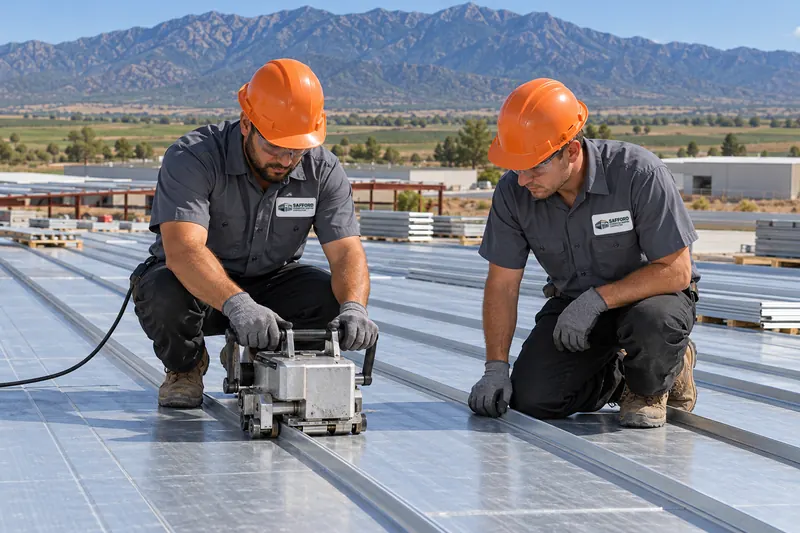
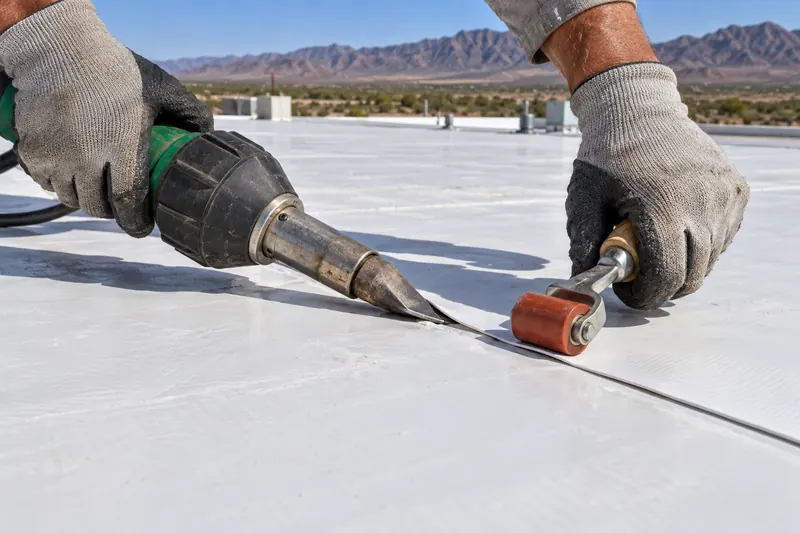
TPO seam being pressed with a silicone roller behind a hot-air welder

TPO Roofing Contractor

Heat-welded white membrane for low-slope roofs, installed over new tapered insulation or as a recover over a dry existing roof.

Best for
Retail, office, and clinic roofs over cooled space
Look elsewhere
Steep metal roofs and roofs under heavy chemical exhaust
TPO roofing details
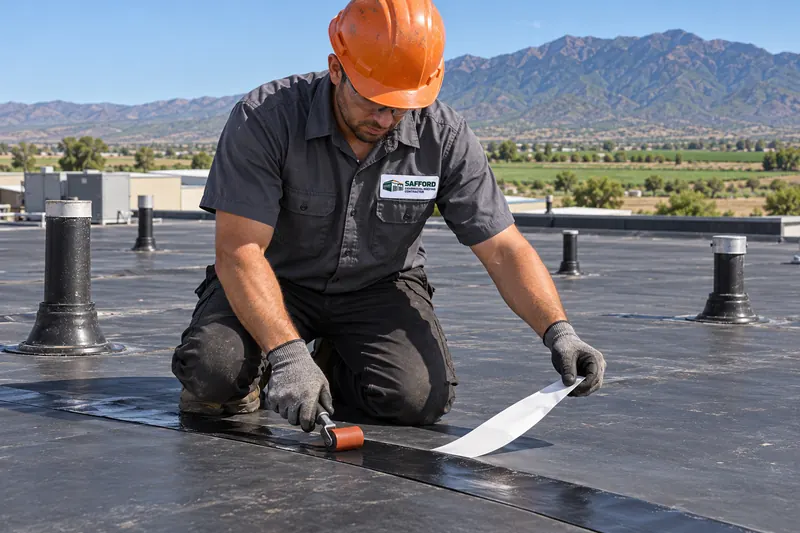
Roofer pressing seam tape on a black EPDM roof with a hand roller

EPDM Roofing Contractor

Synthetic rubber sheet with taped seams, a common pick for roofs crowded with pipes, vents, and odd corners.

Best for
Shops, storage, and ag buildings without cooling
Look elsewhere
Retail roofs that need high reflectivity
EPDM roofing details
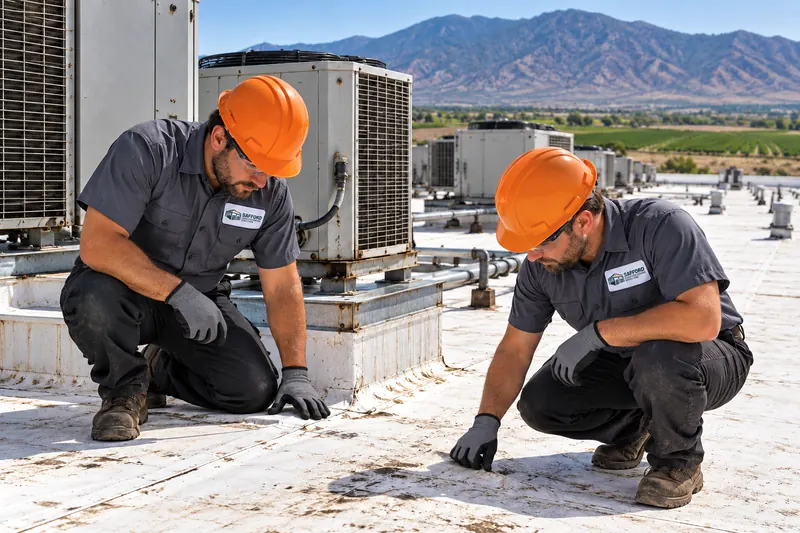
Roofers checking membrane at refrigeration units on an industrial roof

Industrial Roofing Contractor

Roof replacement and repair on plants, gins, and warehouses, phased around production, shift changes, and truck traffic.

Best for
Large spans with stacks, conveyors, and refrigeration units
Look elsewhere
Small storefront roofs with one or two units
Industrial roofing details
Roofers seaming standing seam panels on a commercial building

Commercial Metal Roofing Contractor

New standing seam or through-fastened panels, fastener and washer replacement, and retrofit framing that adds slope over a flat roof.

Best for
Pre-engineered steel buildings, shops, and barns
Look elsewhere
Low-slope roofs crowded with rooftop units
Metal roofing details

Choosing A System

Cooled Space, Foot Traffic, And Roof Slope

Three questions narrow the choice before the inspection settles it: is the space below cooled, who walks the roof, and how much slope is there?

How the four roof systems compare
SystemSpace belowRooftop trafficRoof slopeSeams or joints
TPOCooled retail, office, and clinic spaceService traffic, with walkway padsLow-slope, needs positive drainageHot-air welded and probed
EPDMUnconditioned shops and storageModerate, with pads at unitsLow-slope and odd shapesTaped or adhered laps
Industrial assembliesProduction floors, gins, cold storageHeavy, on marked walk pathsLarge low-slope or metal spansReinforced membrane or panel laps
MetalShops, barns, and steel buildingsLight, stepping at purlin linesSloped, sheds water fastStanding seams or screws and washers

Not Sure Which System?

Roof Leaking And No Idea What It's Made Of?

Call and describe the roof surface: white sheet, black rubber, metal panels, or gravel. We'll come out, identify the system, and check what sits under it.

Shared Process

How Every Roof System Job Runs

The steps stay the same for all four systems, while the details change with the membrane or panel.

  1. Inspect Your Roof

    Every system gets the same first visit: the field, the seams or panel laps, the edges, the drains, and the rooftop units, with photos and core cuts wherever the surface hints at wet insulation.

  2. Match The System

    Slope, the space below, rooftop traffic, and the existing deck decide which of the four systems goes on, or whether a repair holds for now. That choice gets written into the estimate.

  3. Stage The Work

    Material deliveries, lift or crane spots, and any HVAC disconnects get scheduled with whoever runs the building, so entrances, docks, and parking stay usable through the job.

  4. Build It Section By Section

    Tear-off, deck repair, tapered insulation, and the new membrane or panels go down one area at a time, each closed watertight at the end of the workday.

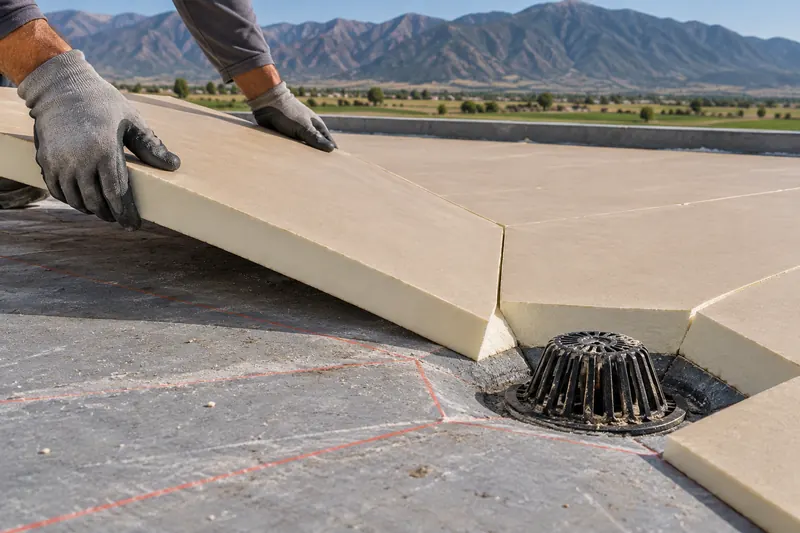
    Tapered insulation boards being laid toward a roof drain
  5. Check And Hand Over

    Seams are probed or rolled, flashing gets checked at every curb and wall, drains are flushed, and you get photos and a maintenance list for the roof.

Choosing A Roof

Questions About Commercial Roofing Services

Answers on picking a system, recovering, and pricing a commercial roof in Safford.

  1. Which roof system fits my type of building?

    It comes down to roof slope, how the building is used, and whether the space below is cooled. White TPO fits retail, office, and clinic roofs, EPDM or metal fits unconditioned shops, gins and plants take metal or reinforced single-ply, and steel buildings take standing seam. Deck, insulation, and drainage can change that answer.

  2. Can a new roof go over the old one?

    Sometimes, if the existing roof is dry and the building code allows another layer. A recover saves tear-off cost, but wet insulation left underneath keeps rotting the deck and blisters the new membrane, so core cuts decide it before any price is set.

  3. Do you repair roofs or only replace them?

    Both. A few open seams, a cracked curb flashing, or loose panel fasteners get repaired, and replacement comes up when wet insulation or failing membrane runs across large areas. The inspection report explains which applies to your roof and why.

  4. Which roof system handles hail best?

    Metal panels handle most hail better than membranes, though large stones can dent them. Thicker TPO or EPDM, with a cover board under the membrane, adds puncture resistance on low-slope roofs. After a hailstorm, a roof check documents bruises and punctures for any insurance claim.

  5. Can different systems go on one building?

    Yes. A building with a sloped metal warehouse and a flat office wing often gets standing seam on one and TPO on the other, with a flashed transition where they meet. Each area gets the system that fits its slope and its use.

  6. What affects the price of a commercial roof?

    Roof size, tear-off layers, how much insulation is wet, the number of curbs and penetrations, edge metal, and access for lifts or cranes. Price comes after the inspection, because those items change from one roof to the next.

Next Step

Get A Free Estimate For Any Of The Four Systems

Send the roof size and type through the estimate form, or call and we will set up an inspection of the building.

Call Us +1 (623) 310-0167