Edge And Parapet
Long perimeter runs on large buildings take the full force of monsoon gusts. Loose edge metal peels membrane quickly, so cleats and fasteners get checked along the whole run.
Plants, Gins, And Warehouses
As an industrial roofing contractor in Safford, we replace and repair large roofs on gins, processing plants, warehouses, and mining-support buildings while operations keep running.
Fit Check
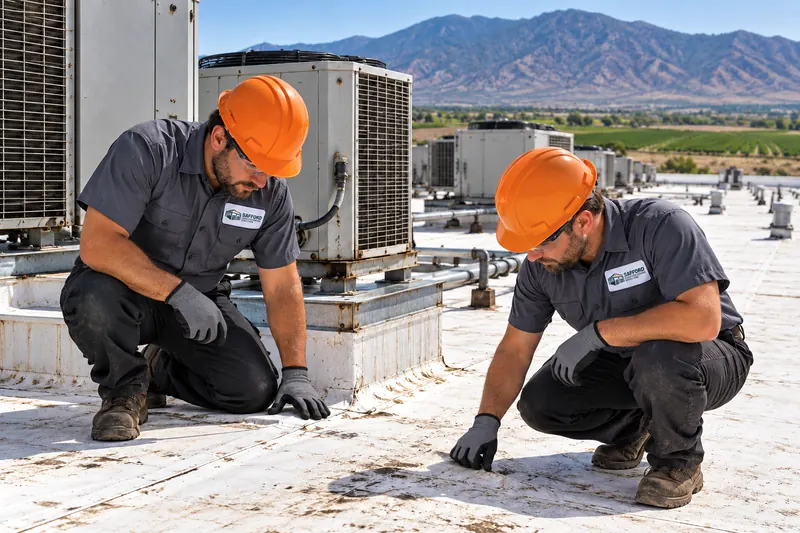
Equipment, exposure, and operations below the deck make a roof industrial more than its size does.
Industrial Warning Signs
Process buildings add dust, vibration, and exhaust to the usual heat and storms. These five zones show it first.
Long perimeter runs on large buildings take the full force of monsoon gusts. Loose edge metal peels membrane quickly, so cleats and fasteners get checked along the whole run.
Dust, cotton lint, and fibers settle on the field and hold moisture against seams. Chemical fallout from process exhaust softens some membranes, so the sheet gets matched to what lands on it.
Strainers clog with lint and debris faster on gins and plants than on retail roofs. One blocked drain on a large roof backs water across thousands of square feet.
Exhaust stacks, conveyor housings, and refrigeration curbs vibrate and heat-cycle all day. Flashing at these points cracks first and needs heavier detailing than a standard pipe boot.
Rust-stained deck, sagging bays, and wet insulation under long-running leaks show up in core cuts. Large roofs get a moisture survey so only the wet sections come off.
Industrial Choices
Large roofs rarely need one answer for the whole surface. Sections get repaired, recovered, or replaced based on what the moisture survey shows.
| Option | When it fits | What the work includes | Watch for |
|---|---|---|---|
| Phased replacement | Wet insulation across large areas | Section-by-section tear-off, each closed watertight overnight | Keeping open sections clear of production schedules |
| Reinforced single-ply | Low-slope plant and warehouse roofs | Reinforced TPO or EPDM, cover board, heavy walk paths | Matching the membrane to chemical exposure |
| Metal panel or retrofit | Sloped or ponding steel buildings | New panels, or retrofit framing over the old roof | Structural check for added framing weight |
| Detail rebuild | Leaks at stacks, conveyors, and curbs | New curbs, crickets, and heavy flashing at each penetration | Shutdown windows for hot or vibrating equipment |
Through The Year
Plant schedules and Safford weather both set the work calendar on an industrial roof. Each season changes what gets done up top.
With June highs averaging 100°F, summer roof work starts before sunrise and moves to shaded or lighter tasks by afternoon. Membrane and adhesives get stored out of direct sun.
Monsoon wind drives dust into drains and against curbs, then the downpour arrives. Open roof sections get closed before forecast storms, and strainers get cleared after each event.
Cooler months often line up with slower production at seasonal plants, which opens longer work windows on the roof. Adhesives and sealants get cold-weather handling on freezing mornings.
A spring moisture survey sets the repair list for the year, and a fall walk documents storm and equipment damage. Large roofs stay ahead of leaks with a written map of each section.
Production Roof Leaking?
Call and tell us what sits under the leak and when the line runs. We will plan the roof inspection around your shift schedule.
Industrial Process
Large roofs get worked in sections, planned around production, deliveries, and the safety rules on the property.
A full walk with your safety contact, a moisture survey across the field, and close checks at every stack, conveyor, and curb. Findings go on a sectioned roof plan with photos.
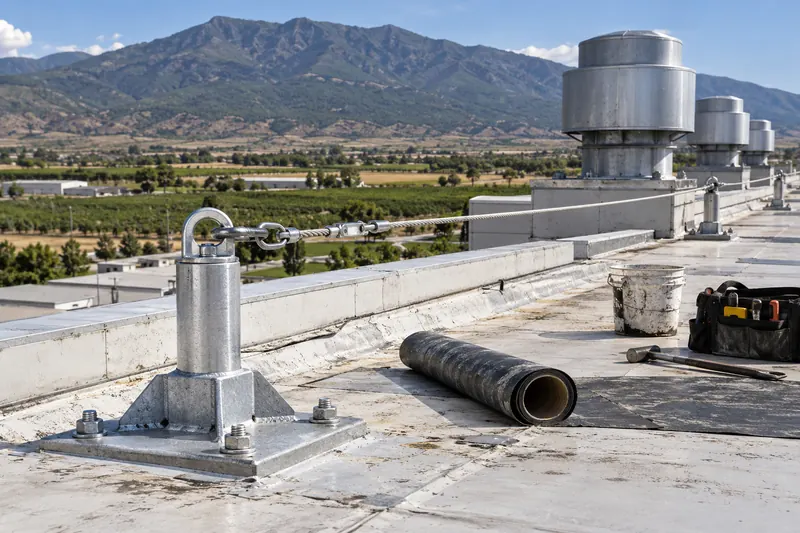
Site access rules, fall protection, hot-work permits, and any lockout of equipment near the work get settled before the first roof section comes off. Lifts and material stay clear of trucks and loading areas.
Each roof section gets a work window that fits production. Sections opened in the morning are closed watertight before the crew leaves, so product and equipment below stay dry.
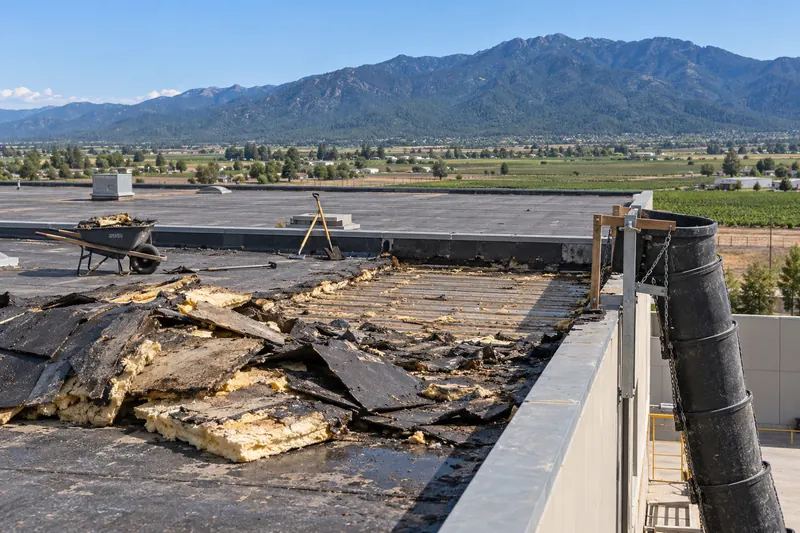
Stacks, conveyor housings, and refrigeration curbs get new curbs or crickets where needed, then heavy flashing sized for heat and vibration, and the membrane around them gets a reinforced walk path.
Drains get flushed, debris leaves the roof, and you get a map showing what was replaced, what was repaired, and what to watch at the next survey.
Related Systems
Plant roofs often combine an industrial plan with one of these systems.
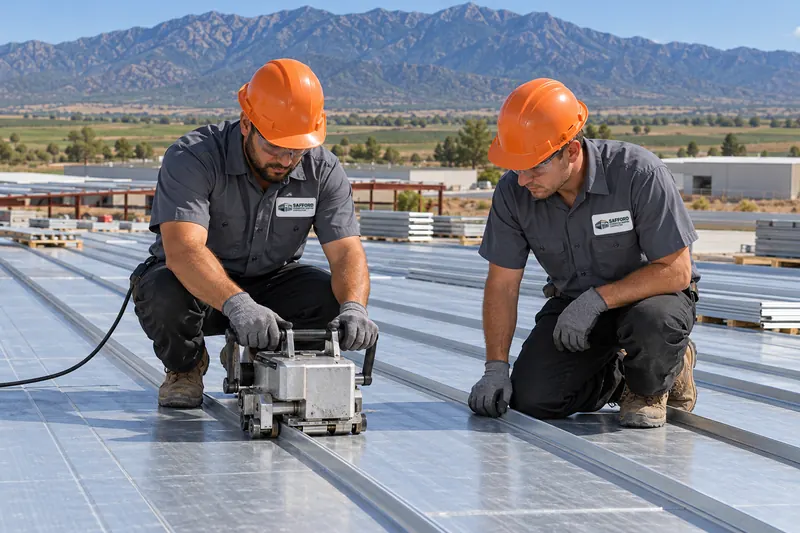
Gins and processing buildings with sloped steel roofs often get new standing seam panels or a retrofit instead of a membrane.
Metal roof systems for plants and shops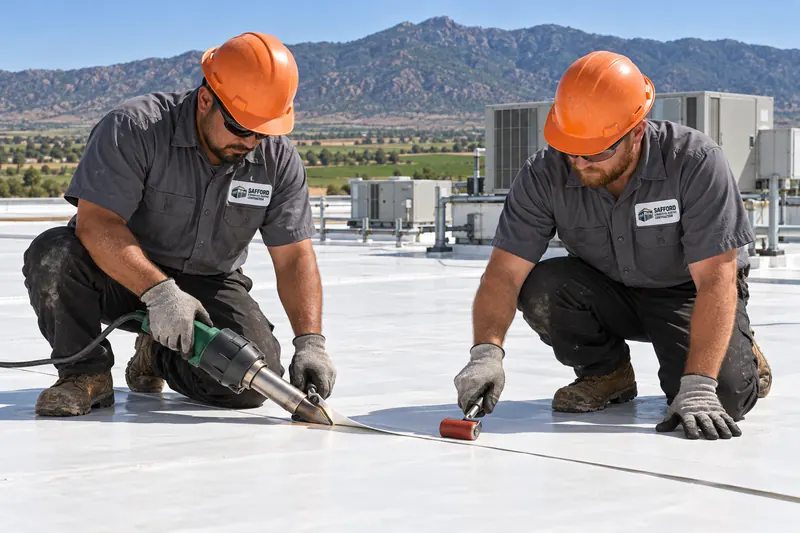
Flat warehouse and cold-storage roofs over cooled space often take reinforced white TPO with welded seams and walkway pads.
TPO roofing in SaffordIndustrial Questions
Answers for gins, plants, and warehouses that cannot stop for a roof.
Yes. Industrial roofs around Safford often span large areas, carry dust and debris, and sit over equipment that can't be shut down casually. The work calls for safety planning around active equipment, attention to dust and chemical exposure, heavy flashing at stacks and conveyors, and staging that keeps lifts clear of trucks.
In most cases. Roof sections get scheduled around production, and work near hot or vibrating equipment happens during planned shutdowns. Noisy tear-off can move to shift changes or off-hours, and product and equipment below each open section get covered or moved first.
Heat and vibration. Stacks expand, shake, and cook the flashing around them until the sealant cracks and the membrane splits at the base. A rebuilt curb or a high-temperature flashing collar with a storm collar above it closes the leak path.
Dust and lint hold moisture against the membrane, clog strainers, and hide punctures during inspections. On gins and feed buildings, regular roof cleaning and drain checks after windy days cut down on surprise leaks and ponding during monsoon storms.
Every roof edge without a tall enough parapet needs fall protection during the work. Existing anchors get inspected before use, and where none exist, temporary anchors or guardrails go in for the job. Your own safety rules apply on top of those measures.
That comes down to what comes out of the stack. Grease and oils attack EPDM, while some solvents affect TPO. The inspection records what lands on the roof near each vent, and the membrane and walkway layout get chosen for that exposure.
Often. A moisture survey ranks sections from worst to best, and the wettest sections come off first. Remaining areas get repairs to hold until the next phase, with each phase priced separately in the written estimate for your budget planning.
Free Estimate
Send the roof size and what runs underneath, or call to plan an inspection around your production schedule.
Roof Question?
Leave a name and number and we will call you back about the building.
Or call now: +1 (623) 310-0167