Eave, Rake, And Ridge
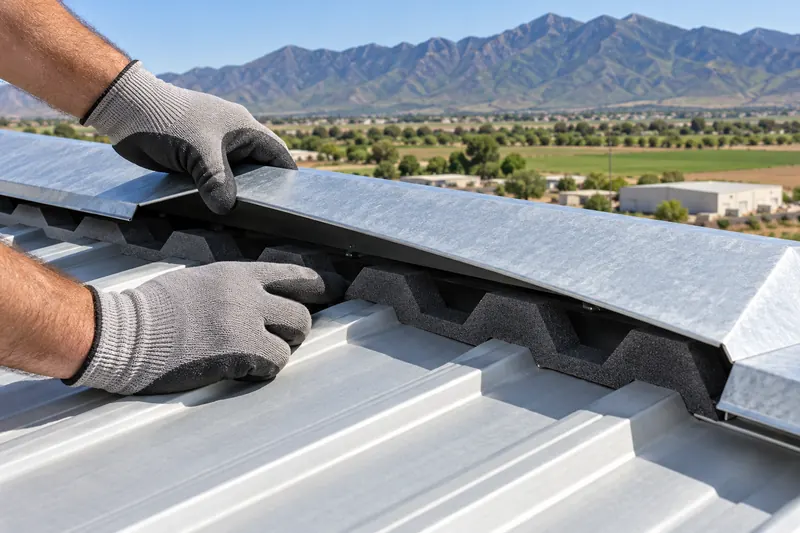
Trim and ridge closures loosen in monsoon wind and let dust and rain under the panels. Missing closure strips at the ridge show up as daylight from inside the building.
Standing Seam And Panel Roofs
As a commercial metal roofing contractor in Safford, we install standing seam and through-fastened panels, replace fasteners, and build metal retrofits over tired flat roofs.
Fit Check
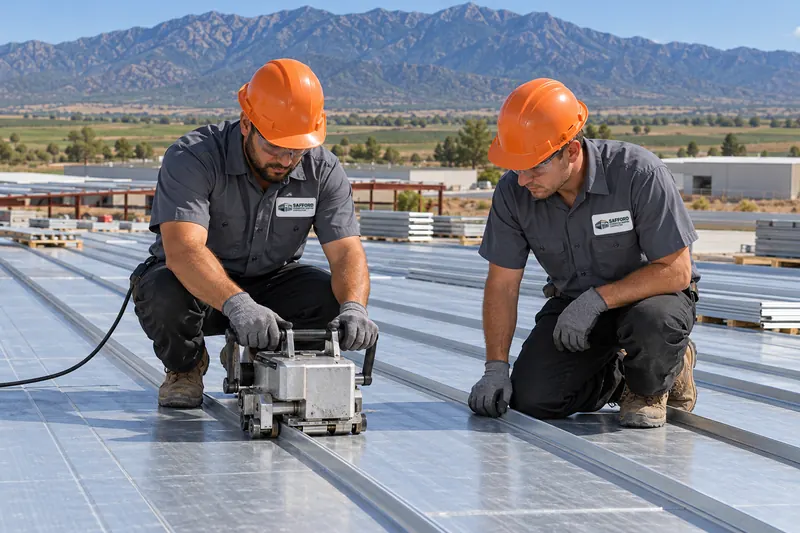
Metal fits sloped roofs and steel buildings, and a retrofit can bring a ponding flat roof into that group.
Metal Warning Signs
Metal roofs fail at fasteners, laps, and trim long before the panels wear through. Walk these five zones.
Trim and ridge closures loosen in monsoon wind and let dust and rain under the panels. Missing closure strips at the ridge show up as daylight from inside the building.
Screws back out as panels expand in summer heat and contract on cold nights, and their rubber washers crack in the sun. Each loose screw leaves a hole that leaks.
End laps and side laps collect water when the sealant dries out. Rust bloom along a lap, and stains on the purlins below it, show where water has been sitting.
Pipe jacks and curbs cut through panel ribs are the weak spot on most metal roofs. Cracked flashing boots and sealant-only repairs around vents need proper rib-matched flashing.
Gutters clogged with field debris overflow behind the fascia during monsoon downpours. Valleys and very low-slope panel runs hold water at laps and fasteners.
Metal Choices
The choice turns on whether the panels are worth keeping and how the roof drains.
| Option | When it fits | What the work includes | Watch for |
|---|---|---|---|
| Fastener and seal repair | Panels intact, screws backed out | Oversized screws and washers, lap sealant, trim fastening | Rusted panels too thin to hold a screw |
| Standing seam replacement | Worn through-fastened roofs and new buildings | Concealed-clip panels seamed on the roof | Movement details at ridge and eave |
| Through-fastened panel replacement | Shops and barns on a tighter budget | New exposed-fastener panels on existing purlins | Fasteners to recheck as panels move |
| Metal retrofit over a flat roof | Ponding flat roofs on solid structure | Framing that adds slope, then new panels | Engineer review of added framing weight |
Through The Year
Panels move every day in Safford, with June highs averaging 100°F and 74 winter nights a year at or below freezing.
Long panels grow in the afternoon sun. Standing seam clips let them slide, while through-fastened panels pull at their screws, which is why washers and screws get checked every year.
Sloped metal sends monsoon rain off the roof in seconds and resists hail better than many membranes. Large hailstones can still dent panels cosmetically, which gets noted for insurance.
Cold nights chill the panels, and warm, moist air inside condenses on their underside. Drips that show up on cold mornings without rain point to condensation, which insulation or vapor control fixes.
Spring and fall are the times to walk the panel runs, re-seat backed-out screws, replace cracked washers, and clear gutters and valleys before or after the storm season.
Loose Screws?
Call and tell us whether the drips follow rain or show up on cold mornings. Fastener and lap leaks often get fixed without new panels.
Metal Process
These steps cover a new panel roof, a re-fastening job, or a retrofit over an old flat roof.
A walk of every panel run, a hand check of fasteners, and a look from inside at purlins and the underside of laps. Rust and loose screws get marked on a roof plan with photos.
Intact panels get new screws, washers, and lap sealant. Rusted or thin panels get replaced, and a ponding flat roof gets a retrofit design with an engineer check of the added weight.
Retrofit jobs start with framing set in rows over the old roof to create slope. Replacement jobs check and fasten purlins before the first panel goes up.
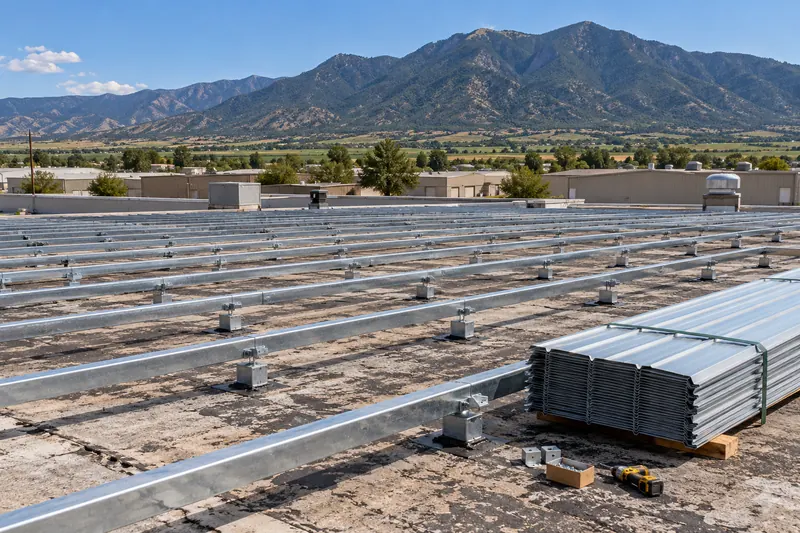
Panels go on with concealed clips and get seamed with an electric seamer, or get fastened through the flat with new screws and washers. Trim and closures follow at every edge.
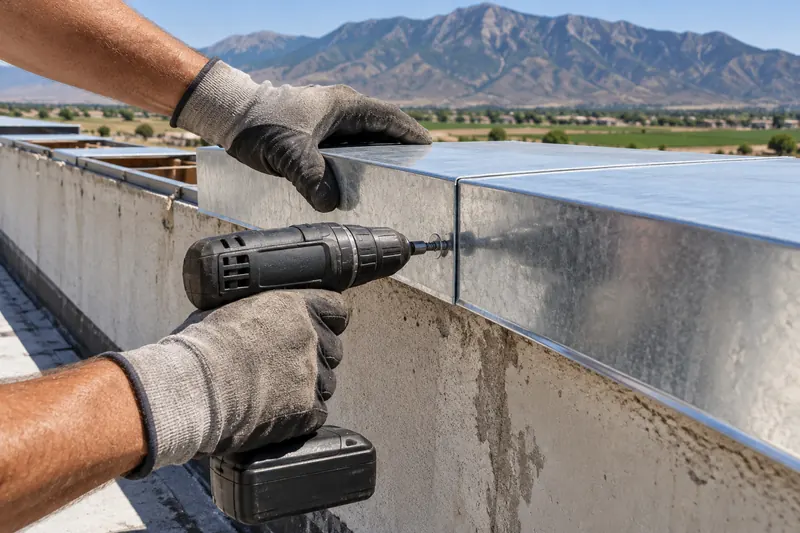
Fasteners get a final check, gutters and valleys get cleared of cut-offs and screws, and you get photos plus a fastener-check schedule for the roof.
Related Systems
Metal buildings often sit next to roofs that need a different system.
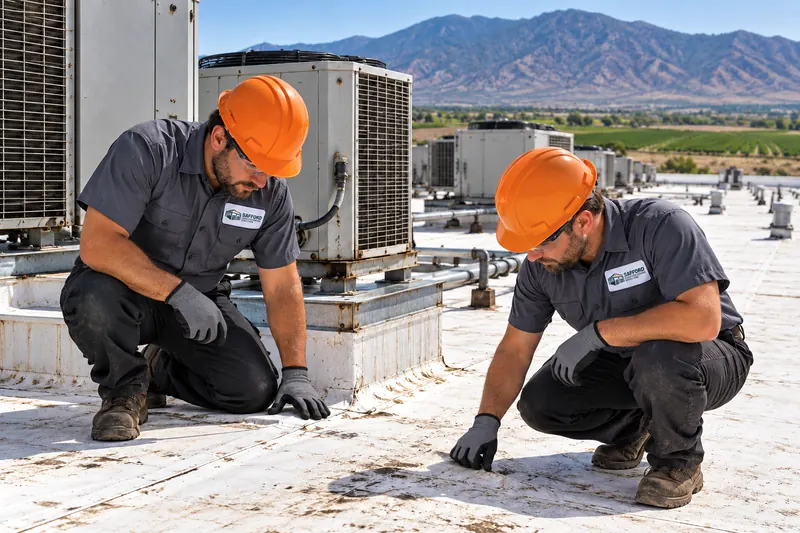
Gins and processing plants with metal roofs over running equipment need industrial planning for phasing, dust, and stack flashing.
Industrial roofing for plants and gins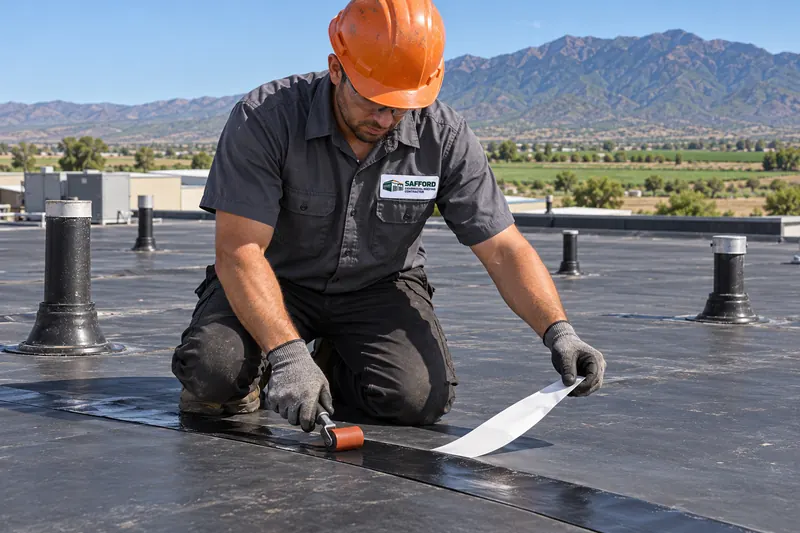
Low-slope additions and pipe-crowded roofs beside a metal building often take EPDM rubber tied into the panels.
EPDM rubber roofingMetal Roof Questions
Answers on panels, fasteners, retrofits, and storm damage.
Often, yes. Standing seam and through-fastened metal roofs are common on shops, barns, warehouses, and pre-engineered steel buildings across Graham County. Metal sheds monsoon rain quickly and resists hail better than many membranes. Through-fastened panels need fastener and washer checks, since screws loosen as panels expand in the heat.
Standing seam panels attach with hidden clips and seamed ribs, so no screws pass through the weather surface. Through-fastened panels are screwed straight through, cost less up front, and need periodic screw and washer replacement as the panels move.
Condensation. On cold mornings, warm, moist air from inside meets chilled panels and forms water on their underside. Insulation with a vapor barrier, or better ventilation, stops it, while caulking the roof surface leaves the drip in place.
Yes, with a retrofit. Light-gauge framing goes over the existing roof to create slope, and new metal panels go on top. The structure needs an engineer's check for the added weight, and wet insulation in the old roof gets dealt with first.
Most hail leaves metal panels watertight, though large stones can dent them. Dents stay cosmetic unless they crack the paint and let rust start at the seams. After a hailstorm, a roof check with photos documents damage for an insurance claim.
Once a year at minimum on through-fastened roofs, and again after strong monsoon wind. Backed-out screws and cracked washers get replaced with oversized screws where the hole has worn. Standing seam roofs need checks at trim and penetrations more than at the panels.
Sometimes. Panels with surface rust and solid metal underneath can take a rust-inhibiting primer and coating system after the fasteners are replaced. Panels rusted through at laps or along the eaves need replacement, because coating over holes only delays the leak.
Free Estimate
Tell us the panel type if you know it and where the drips land. We will check every run of fasteners and laps before pricing the work.
Roof Question?
Leave a name and number and we will call you back about the building.
Or call now: +1 (623) 310-0167