Edge And Parapet
Shrinking membrane pulls away from parapet walls and leaves the base flashing stretched tight like a drum. Gaps behind the termination bar let wind-driven rain get behind the sheet.
Rubber Membrane Roofs
As an EPDM roofing contractor in Safford, we install, replace, and repair rubber membrane roofs on shops, storage buildings, ag structures, and roofs crowded with penetrations.
Fit Check
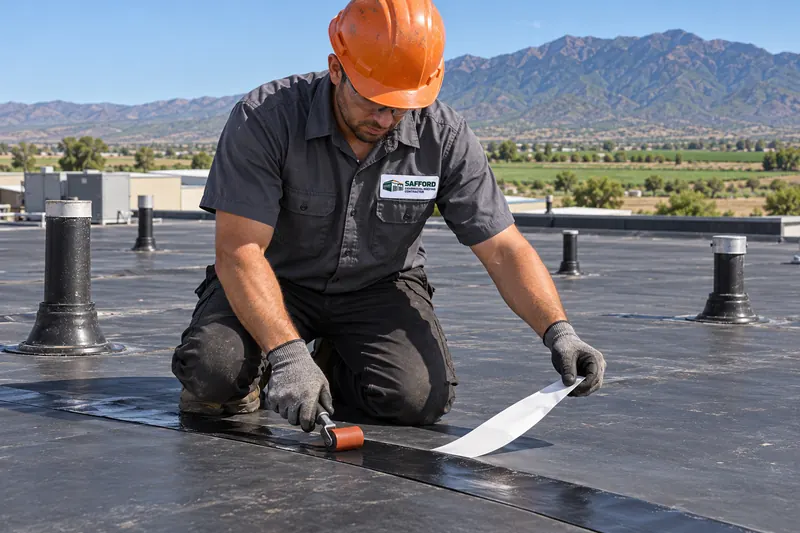
EPDM suits roofs with wide temperature swings, odd shapes, or many penetrations. Some buildings fit another system better.
EPDM Warning Signs
EPDM problems tend to start at seams and flashings rather than in the sheet itself. Check these five zones.
Shrinking membrane pulls away from parapet walls and leaves the base flashing stretched tight like a drum. Gaps behind the termination bar let wind-driven rain get behind the sheet.
Seam tape that lifts at its edges, old glued seams that peel apart, and wrinkles across the field show where the adhesive or the membrane itself has aged out.
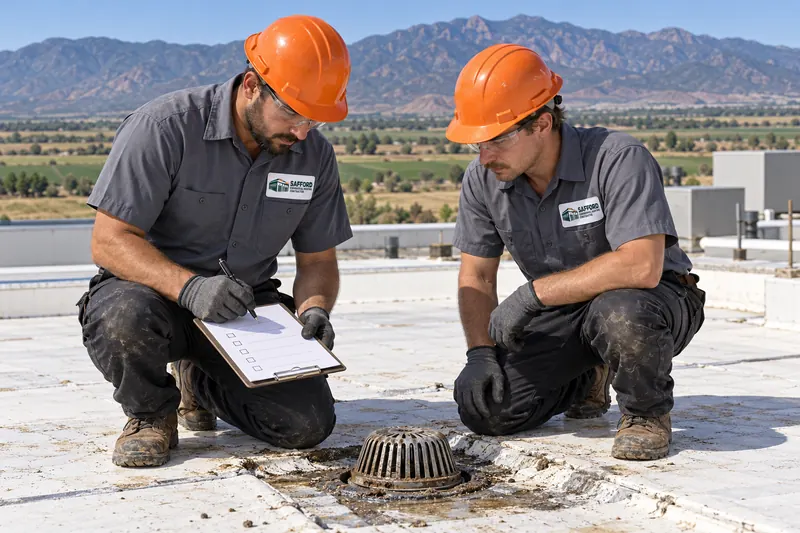
Water standing around drain clamping rings and scuppers clogged with field dust keep the sheet wet for days. Clamping rings with loose bolts are a common leak point too.
Pipe boots split at the top, pitch pans dry out, and patches around vents curl at the corners. EPDM roofs with dozens of penetrations need each one checked.
Blisters, soft spots, and ceiling stains away from any seam point to water in the insulation. A core cut confirms it before any repair or recover gets priced.
EPDM Choices
Scope runs from a single taped repair to a new fully adhered roof, set by the condition of the sheet and the insulation.
| Option | When it fits | What the work includes | Watch for |
|---|---|---|---|
| Seam and penetration repair | Lifted tape, split boots, curled patches | Clean, prime, and add new seam tape or a cover-tape patch | Sheet too brittle to hold primer |
| Section replacement | One damaged area on an otherwise dry roof | Cut out, replace insulation, tie in new EPDM | Matching old and new sheet at the tie-in |
| Full tear-off and new EPDM | Widespread wet insulation or a shrinking sheet | Remove to the deck, new insulation, adhered or fastened EPDM | Deck rust or rot found during tear-off |
| White EPDM | Roofs where reflectivity matters | White-on-black or all-white EPDM sheet | Keeping the white surface clear of dust |
Through The Year
Rubber membrane takes the Safford swings well when the seams and flashings are kept up. Here is the year from the point of view of an EPDM roof.
Black EPDM absorbs heat, which matters little over a shop or storage barn without cooling. Over cooled space, white EPDM or another system keeps the roof surface cooler in June.
Monsoon gusts pull at seam edges and loose flashing first. Wide taped seams pressed with a roller, and fresh lap sealant at every exposed edge, hold against wind-driven rain.
EPDM stays flexible through the 74 nights a year that Safford drops to freezing or below. Water trapped under lifted seams still freezes, so seams get checked before winter.
A spring walk catches tape and boots that dried out over summer, and a fall walk catches storm damage. Cover-tape patches and new boots fix most findings in a few hours.
Lifted Seams?
Call with a count of the pipes and vents on the roof and where the water shows up inside. Split boots and lifted tape are quick fixes when caught early.
EPDM Process
Each step below applies whether the job is a section repair or a whole new rubber roof.
Each seam gets a probe and each penetration a close look, since most EPDM leaks start at a lap or a boot. Cores come out wherever the field feels soft underfoot.
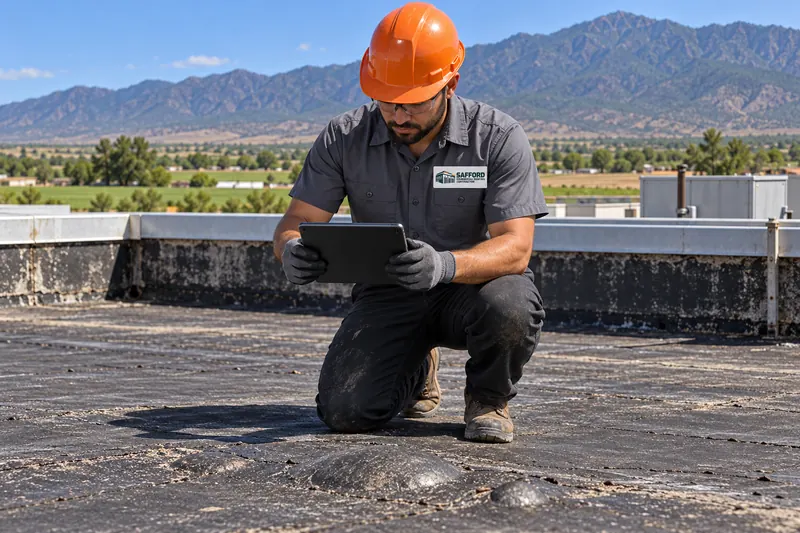
Findings go on a roof plan: seams to re-tape, boots to replace, sections to cut out, or a full tear-off when wet insulation spreads across the field.
Repair areas get cleaned and primed so new tape bonds, while replacement areas come down to the deck, get new insulation, and tie back into the intact sheet around them.
New EPDM goes down adhered or fastened, with taped seams rolled tight and cover tape over every T-joint. Pipes and vents get new boots and flashing.
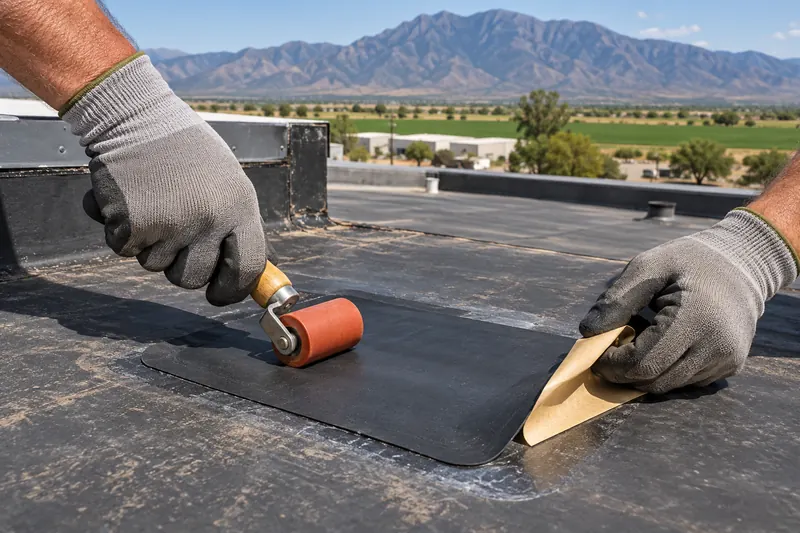
Termination bars, lap sealant at exposed edges, and clean drains finish the job. You get photos and a list of the spots worth checking each spring.
Related Systems
A rubber roof is one of four options; two others often come up on the same buildings.
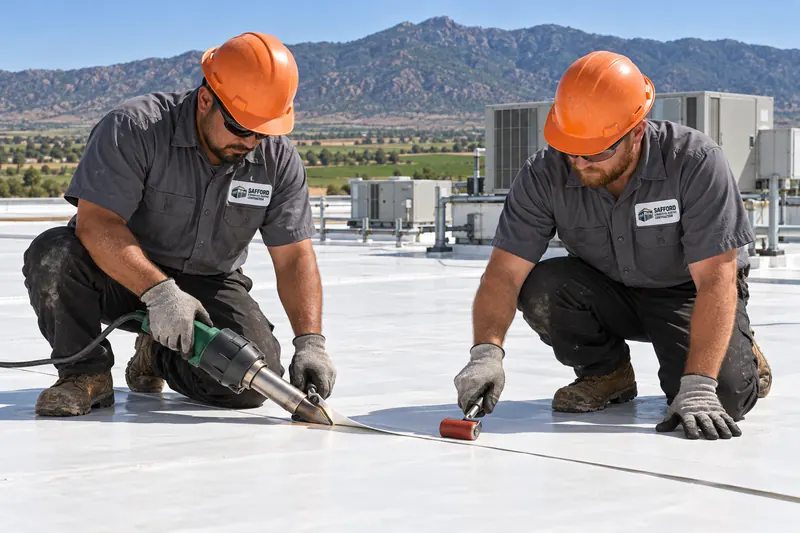
For a low-slope roof over cooled retail or office space, white heat-welded TPO is the usual alternative to compare against EPDM.
TPO roofing in Safford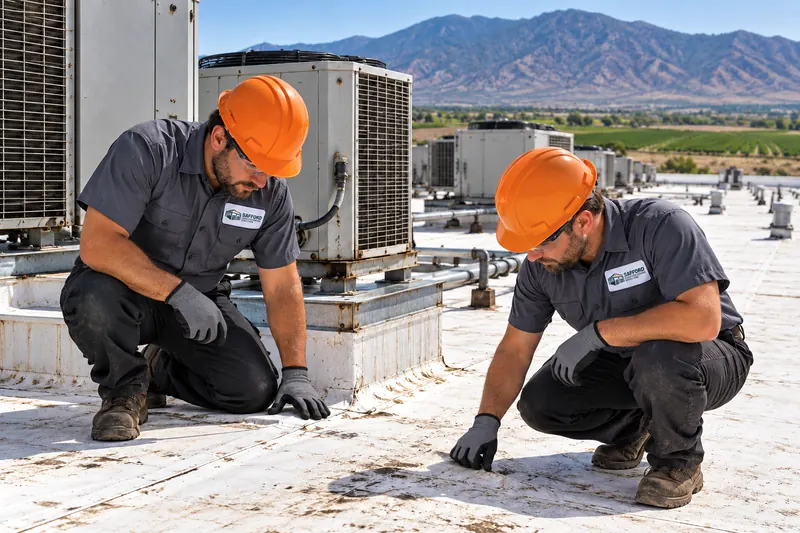
Plants and gins with large spans, stacks, and dust load need industrial roof planning, with phased sections and heavier flashing.
Industrial roofs for plants and ginsEPDM Questions
What owners of rubber roofs ask about seams, heat, and repairs.
Where a roof sees wide temperature swings, odd shapes, or lots of penetrations. EPDM stays flexible on cold winter nights and tough in summer. Black EPDM absorbs heat, so it suits unconditioned shops, storage, and ag buildings, and white EPDM is there when reflectivity matters. Seams are taped or adhered instead of welded.
Usually, if the sheet still stretches and takes primer. Cleaning, priming, and a cover-tape patch rolled tight fix punctures and lifted laps. A sheet that cracks when folded, or one that has shrunk away from the walls, is past patching.
Pipe boots dry out and split at the top, and old pitch pans shrink away from the pipe. Replacing the boot, or flashing the pipe with new EPDM and a stainless clamp, stops most of these leaks for years.
Over unconditioned shops and storage, heat gain from a black EPDM roof rarely matters. Over offices or retail with air conditioning, the extra heat adds to the cooling load in June and July, so white EPDM or TPO is the better pick there.
Sometimes, when the old roof is dry and the code allows another layer. A cover board or new insulation goes down first so the rubber sheet sits on a smooth, clean surface. Wet insulation found in core cuts means a tear-off instead.
Moderate traffic, yes, with walkway pads along the routes to units and hatches. Sharp debris, dropped screws, and ladder feet puncture rubber, so service paths get pads and the roof gets a debris sweep at each inspection visit. Service techs should stay on the pads.
Twice-yearly walks: check seam edges for lift, look at every boot and pitch pan, clear drains, and sweep off debris. Reapply lap sealant where it has dried and cracked. Logging each visit helps track which seams keep needing attention on the roof.
Free Estimate
Count the pipes and vents if you can, and tell us where it leaks. We will check every seam and boot before pricing the work.
Roof Question?
Leave a name and number and we will call you back about the building.
Or call now: +1 (623) 310-0167