Roofing FAQ

Safford Commercial Roofing Contractor FAQ

Answers to the questions building owners ask a commercial roofing contractor in Safford: roof systems, monsoon prep, repair or replace, permits by town, and taxes.

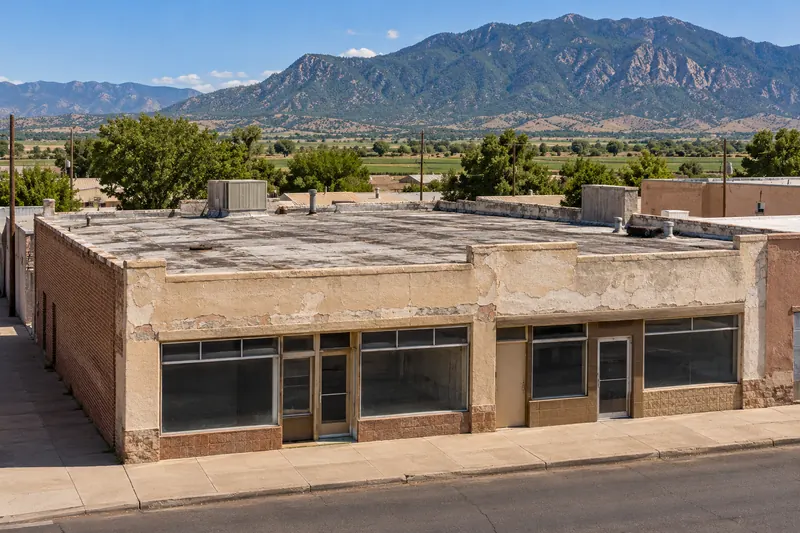
Older main-street commercial building with an aged flat roof

Gila Valley Roofs

Roofs On The Gila Valley Floor

Safford sits on the floor of the Gila Valley in Graham County, close to 2,900 feet up. Roofs here take long, hot summers, freezing winter nights, and monsoon storms that arrive fast.

Many local roofs cover cotton gins, farm and equipment shops, warehouses serving copper mining work, retail strips along US-70 and US-191, schools, clinics, and county and church buildings, and each of those roof types ages differently.

Jump To A Topic

Commercial Roofing Contractor FAQ Topics

18 answers about roof systems, Safford weather, scheduling, permits, and the towns we serve.

Topic 1 of 5

Roof Systems

What does a commercial roofing contractor in Safford actually do?

We inspect, repair, and replace roofs on commercial and industrial buildings around the Gila Valley. That includes single-ply membranes (TPO and EPDM), metal roof systems, and large low-slope roofs on shops, warehouses, and processing buildings.

Most work starts with finding out why a roof is failing: worn seams, ponding, loose metal panels, cracked flashing, or old patches. Fixing the cause matters more than covering the symptom.

Is TPO a good choice for flat roofs in Safford's heat?

Yes, for many low-slope buildings. White TPO reflects much of the summer sun, which can lower roof surface temperatures and cooling loads on retail, office, and clinic buildings.

Heat-welded seams are the key detail. A trained crew welds and probes every seam, because a weak weld opens up after a few summers of expansion and contraction. TPO also handles rooftop traffic around HVAC units better when walkway pads are added. More on TPO roofing in Safford.

When does EPDM make more sense than TPO in the Gila Valley?

EPDM is a strong fit where a roof sees wide temperature swings, odd shapes, or lots of penetrations. The rubber membrane stays flexible through cold winter nights and stays tough in summer.

Black EPDM absorbs heat, so it often suits unconditioned shops, storage buildings, and ag structures where cooling costs matter less. White EPDM is available when reflectivity is a priority. Seams are taped or adhered rather than welded. More on EPDM rubber roofing.

Do you handle industrial roofing for plants, gins, and mining support buildings?

Yes. Industrial roofs around Safford often span large areas, carry dust and debris, and sit over equipment that can't be shut down casually.

These jobs call for:

  • Safety planning around active equipment, fall protection, and site access rules
  • Attention to dust, fibers, or chemical exposure that shortens membrane life
  • Heavy-duty flashing at exhaust stacks, conveyors, and vents
  • Staging that keeps lifts and material clear of trucks and loading areas

More on industrial roof work for plants and gins.

Is metal roofing a smart option for Graham County commercial buildings?

Often, yes. Standing seam and through-fastened metal roofs are common on shops, barns, warehouses, and pre-engineered steel buildings across Graham County.

Metal sheds monsoon rain quickly on sloped roofs and resists hail better than many membranes. Through-fastened panels need fastener and washer checks, since screws loosen as panels expand in the heat. Retrofitting older metal roofs with a new metal system or a coating is also common. More on standing seam and metal roof systems.

Which roof system fits my type of building?

The right system depends on roof slope, how the building is used, and whether the space below is cooled. A general starting point:

Building typeCommon fitWhy
Retail strip, office, clinicWhite TPOReflective surface helps with cooling loads
Unconditioned shop or storageEPDM or metalDurability matters more than reflectivity
Cotton gin, processing plantMetal or reinforced single-plyHandles dust, vibration, and large spans
Pre-engineered steel buildingStanding seam metalMatches the structure and sheds water fast
Low-slope roof with many unitsTPO with walkway padsProtects the membrane from foot traffic

An inspection settles the final choice, because deck condition, insulation, and drainage can change the answer.

How long do TPO, EPDM, and metal roofs last here?

With proper installation and regular maintenance, typical ranges are:

SystemTypical lifespan
TPOAbout 20 to 30 years
EPDMAbout 25 to 30 years
Metal40 years or more

Actual life varies with membrane thickness, installation quality, rooftop traffic, and how quickly small problems get fixed. Strong UV and heat can shorten the low end of these ranges for neglected roofs.

Back to the topic list

Topic 2 of 5

Weather And Roof Condition

How does Safford's weather wear down a commercial roof?

Intense sun, big day-to-night temperature swings, and short, violent storms do most of the damage. Each one attacks a roof in a different way.

  • UV and heat dry out older membranes, coatings, and sealants, so they chalk and crack.
  • Daily expansion and contraction pull at seams, flashing, and metal fasteners.
  • Winter freezes at this elevation can split water trapped in cracks or ponded areas.
  • Monsoon storms bring wind gusts, heavy downpours, blowing dust, and sometimes hail.

The National Weather Service treats June 15 through September 30 as Arizona's monsoon season. NWS Tucson issues forecasts and warnings for southeast Arizona.

Should I get my roof checked before monsoon season?

Yes. Late spring is the best time, before the first storms. A pre-season check catches clogged drains, loose edge metal, and open seams while repairs are still simple.

After a strong storm, a second look is worth it. Wind can lift perimeter flashing and panel edges, and heavy rain shows where water ponds or backs up at scuppers.

Is it better to repair or replace my commercial roof?

Repair usually makes sense when damage is limited and the rest of the roof is sound. Replacement makes sense when problems are widespread or the insulation underneath is wet.

Lean toward repairLean toward replacement
Leaks traced to a few seams or penetrationsLeaks in many areas with no clear source
Dry insulation and a solid deckWet or crushed insulation across large sections
Membrane still flexibleMembrane brittle, shrinking, or pulling from edges
Roof well within its expected lifeRoof near or past its expected life

An infrared or core-sample check helps show how much insulation is wet before you decide.

What routine maintenance keeps a commercial roof in good shape here?

Two inspections a year, one in spring and one in fall, plus a check after major storms. Most problems we find start small and stay cheap when caught early.

  • Drains, scuppers, and gutters: clear out dust, leaves, and debris.
  • Seams and flashing: look for lifting, splits, or dried sealant.
  • Metal fasteners: tighten or replace backed-out screws and worn washers.
  • Rooftop units: check curbs and condensate lines for leaks.
  • Surface: note blisters, ponding, or punctures from foot traffic.

Keeping a simple log of each visit also helps when a warranty or insurance claim comes up.

Back to the topic list

Still Wondering?

Leak Showing Up In A New Spot?

Call and describe where the water shows up inside and what sits on the roof above it.

Topic 3 of 5

Planning The Work

Can you work on our roof without shutting down the business?

In most cases, yes. Roof work can usually be phased so stores stay open, gins keep running during the season, and offices keep their normal hours.

Typical steps include:

  • Scheduling noisy or odorous tasks for early mornings or off-hours
  • Working one section at a time so each area stays watertight overnight
  • Keeping crane and material staging away from entrances and loading docks
  • Coordinating with your team before any HVAC unit is disconnected

Summer crews often start before sunrise to avoid peak afternoon heat.

How do I get started?

Call us or request a free estimate to set up a commercial roof inspection. We walk the roof and check what matters most for your building:

  • Membrane or panel condition, including seams, fasteners, and surface wear
  • Flashing at edges, walls, curbs, and penetrations
  • Drainage, ponding, and the condition of drains and scuppers
  • Signs of wet insulation or deck damage
  • Storm, hail, or wind damage

Afterward, we explain whether repair, a coating, or replacement fits the roof best.

Back to the topic list

Topic 4 of 5

Permits, Taxes, And Rebates

Do I need a permit to reroof a commercial building in Safford or nearby towns?

Usually, yes. A full reroof or structural roof work on a commercial building generally needs a building permit. Who issues it depends on whether the property sits inside a city or town, or in unincorporated Graham County.

LocationStatusPermitting authority
SaffordIncorporated cityCity of Safford (confirm with City Hall before work starts)
ThatcherIncorporated townTown of Thatcher Planning & Zoning
PimaIncorporated townTown of Pima Planning & Zoning
SolomonUnincorporated Graham CountyGraham County Planning & Zoning
Swift Trail JunctionUnincorporated Graham CountyGraham County Planning & Zoning

Requirements for small repairs versus full replacement differ by jurisdiction. Always check with the office before any work begins.

Is there design or historic review for commercial roofs in Thatcher?

Possibly. The Town of Thatcher's Planning and Zoning Division administers design review and cultural resources preservation ordinances. Visible changes to roof material or color on certain properties may need review.

Ask the town early if the building is older or sits in a prominent spot, so review doesn't delay material orders.

Can a new commercial roof be written off under Section 179?

It can. Roofs placed in service on existing nonresidential buildings can count as qualified real property under Section 179. For tax years beginning in 2026, the deduction limit is $2,560,000, according to IRS Publication 946.

Residential rental property does not qualify. Phase-out thresholds and other limits also apply, so check with a CPA before planning around the deduction.

Are there utility rebates for cool or reflective roofs near Safford?

Sometimes, but don't count on one. Electric providers in the Gila Valley differ by address, and any efficiency programs they offer change from year to year.

Where a program does exist, it often requires a product listed in the Cool Roof Rating Council directory. Contact your electric provider before ordering materials to confirm current terms and paperwork.

Back to the topic list

Topic 5 of 5

Service Area

What areas do you serve?

We serve commercial and industrial properties in Safford and these nearby Gila Valley communities:

If your building sits elsewhere in Graham County, ask us about coverage.

Back to the topic list

Free Estimate

Get A Free Ballpark Estimate For Your Roof

Enter the roof size, type, and condition in the estimate form, or call to talk through what you see on the roof.

Call Us +1 (623) 310-0167