Edge And Parapet
Membrane pulled tight across the base of a parapet, called bridging, splits when the building moves. Check the termination bar and coping caps after every strong monsoon wind.
White Membrane Roofs
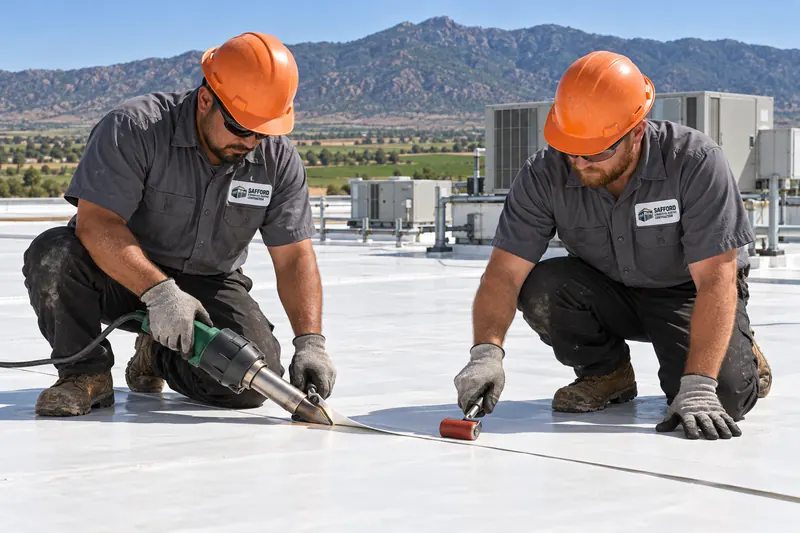
As a TPO roofing contractor in Safford, we install, replace, and repair white heat-welded membrane roofs on retail, office, clinic, and warehouse buildings.
Fit Check
TPO works best on low-slope roofs that drain and sit over cooled space. A few roofs do better with another system.
TPO Warning Signs
On TPO, trouble shows first at welds, edges, and anywhere water sits. Walk the roof by zone.
Membrane pulled tight across the base of a parapet, called bridging, splits when the building moves. Check the termination bar and coping caps after every strong monsoon wind.
Welds that opened after summers of expansion show as a lifted edge you can slip a probe under. Dirt lines along a lap usually mark where water has been getting in.
Ponding rings around drains and dust-choked strainers mean water sits on the membrane for days. Standing water speeds up surface wear and loads the deck at its weakest point.
Condensate lines draining onto the membrane, cracked pipe-boot clamps, and gouges from tools around HVAC units are common TPO leak points on roofs without walkway pads.
A soft, spongy feel underfoot or blisters in the field point to wet insulation below. Core cuts show whether a recover is still an option or the wet boards must come off.
TPO Choices
The right scope comes down to how much of the roof is still dry and how thick a membrane the building needs.
| Option | When it fits | What the work includes | Watch for |
|---|---|---|---|
| Seam and detail repair | Isolated open welds or flashing splits | Clean, prime, and re-weld or patch with new TPO | Aged membrane that refuses a clean weld |
| Recover over existing roof | Dry insulation, and the code allows a second layer | Cover board, then fastened or adhered TPO | Wet spots hidden under the new layer |
| Tear-off and replace | Wet insulation, brittle membrane, or two old layers | Remove to the deck, repair deck, tapered insulation, new TPO | Deck damage found once the roof is open |
| Thicker or reinforced membrane | Heavy service traffic or hail-exposed roofs | Thicker TPO sheet, cover board, walkway pads | Added weight and cost on large roofs |
Through The Year
A TPO roof in Safford sees about 40 days at 100°F or above and 74 freezing nights a year. Here is what each season asks of it.
White TPO reflects much of the summer sun, which lowers roof surface temperature over retail, office, and clinic space. That matters most in June, when the average high in Safford reaches 100°F.
Hot-air welds fuse the sheets into one piece, so wind-driven monsoon rain has no open lap to work under. Probing every weld after installation catches the weak spots early.
Cold nights shrink the membrane while afternoons expand it. Fastening patterns and edge details sized for that movement keep seams and terminations from tearing loose at the perimeter.
Spring and fall visits on a white roof make problems easy to spot: dirt lines at laps, punctures near units, and rust stains from loose metal. Repairs weld in with new TPO.
Open Welds?
Call and tell us where the drip lands inside. Open welds are usually repairable when the membrane around them still takes heat.
TPO Process
Five steps from the first roof walk to a probed, flushed, and documented TPO roof.
We probe the welds, check the edges and every curb, and cut cores where the surface feels soft. Photos and a marked roof plan show exactly where the problems sit.
Dry insulation and a single existing layer point to repair or recover. Wet boards or a brittle sheet mean tear-off. The written scope says which one, and why.
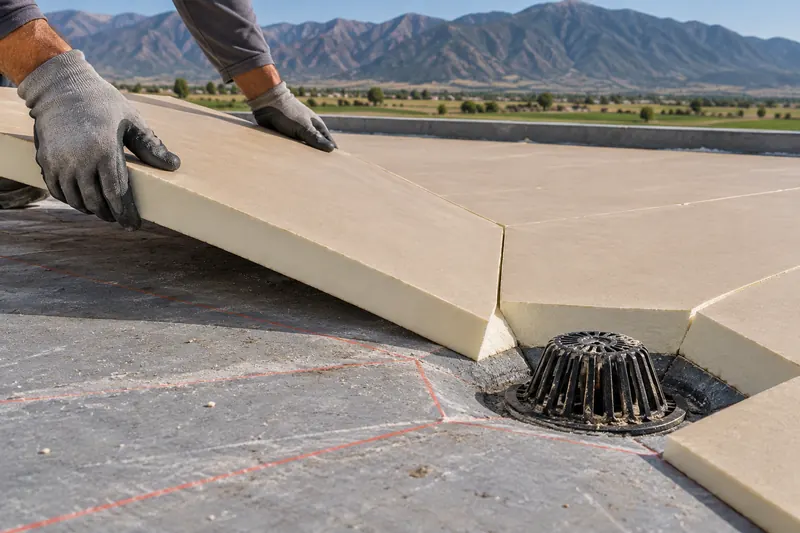
Old roofing comes off one section at a time. Damaged deck gets replaced, then tapered insulation boards are laid to move water toward the drains.
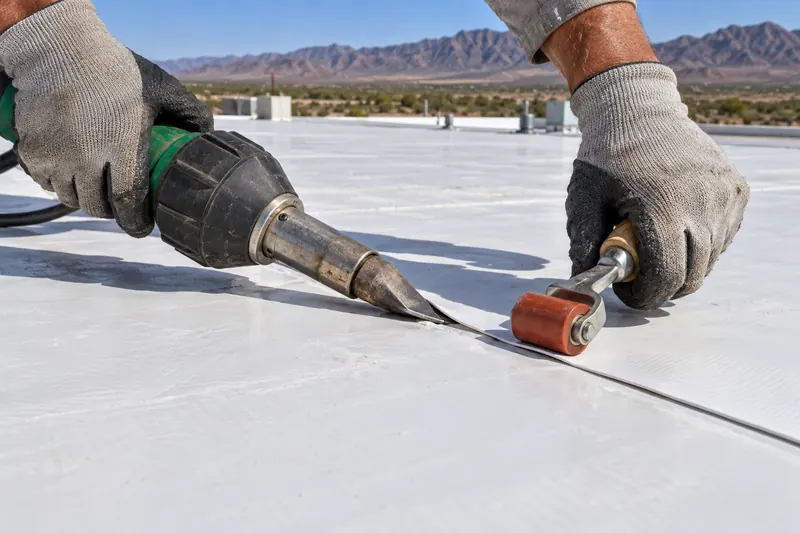
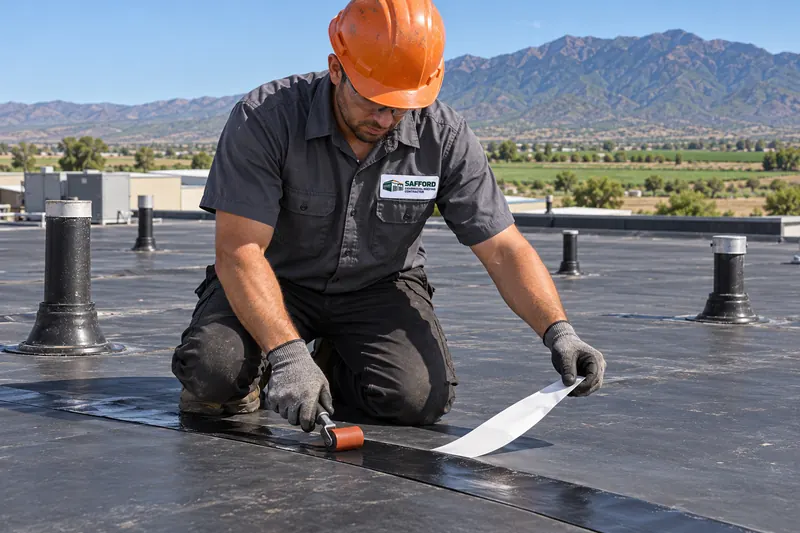
Sheets are fastened or adhered, then joined with a hot-air welder and a silicone roller. Each weld gets probed, and curbs and walls get TPO flashing.
Pads go down along the service paths to each rooftop unit. Drains get flushed, and you receive photos plus a short care list for the new TPO roof.
Related Systems
Some buildings fit a different membrane or panel better than TPO.
If the roof is crowded with pipes and vents or sits over unconditioned storage, EPDM rubber with taped seams is worth comparing.
EPDM rubber roofing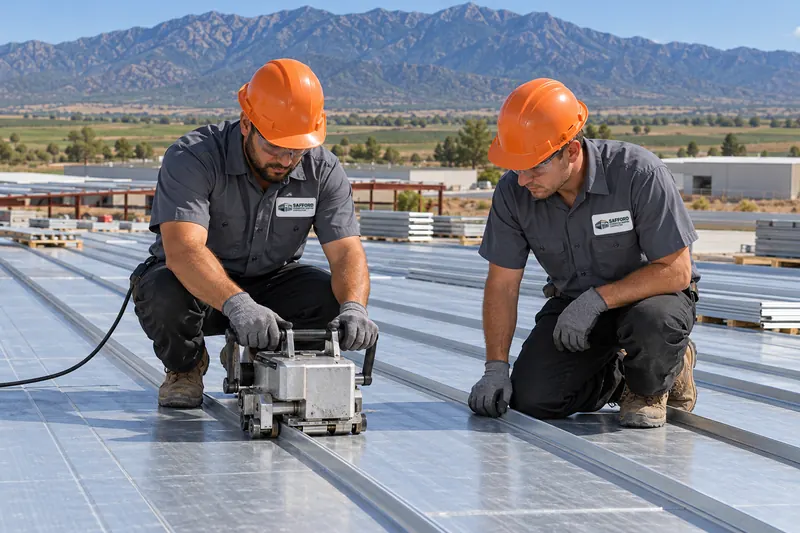
Sloped shops and steel buildings shed monsoon rain faster under standing seam metal, and a retrofit can add slope to a ponding flat roof.
Standing seam and metal roofsTPO Questions
Straight answers about white membrane roofs on Gila Valley buildings.
For many low-slope buildings, yes. The white surface reflects much of the summer sun, which lowers roof temperatures and cooling loads over retail, office, and clinic space. The key detail is the heat-welded seam: every weld gets probed, because a weak one opens after a few summers of expansion.
Thicker sheets last longer and resist punctures better. A standard sheet works on a simple roof with little traffic, while roofs with frequent HVAC service, hail exposure, or a long planned life justify a thicker membrane and a cover board. The estimate lists the thickness so you can compare.
Only when the existing roof is dry and the building code allows another layer. A cover board goes down first, then the TPO is fastened or adhered. Core cuts decide it, since wet insulation trapped under a recover keeps damaging the deck.
Ponding comes from a deck that sagged, insulation that crushed, or drains set too high or clogged with dust. TPO handles brief ponding, but water that sits for days wears the surface. Tapered insulation, crickets, or added drains fix the slope at replacement.
Units stay on their curbs in most jobs. The curbs get new flashing, and taller curbs come into play when the insulation gets thicker. Any HVAC disconnect gets scheduled with your staff or service company before work around it starts.
Clean the area, prime it, and heat-weld a TPO patch over the puncture, with rounded corners so the edges stay down. Punctures near units usually come from dropped tools or screws, so walkway pads often go in at the same time.
Twice-a-year walks in spring and fall, plus a look after big storms. Clear drains and scuppers, check welds near units, remove debris, and rinse off dust so the white surface keeps reflecting. Small weld repairs done early keep a TPO roof going for decades.
Free Estimate
Tell us the roof size and where the leaks show up. We will check the welds, the drains, and the insulation before pricing anything.
Roof Question?
Leave a name and number and we will call you back about the building.
Or call now: +1 (623) 310-0167